
Healthy Yogurt Recipes for Babies
- May 13, 2024
- Updated: April 22, 2026
- 0 Comments
You may be wondering if babies can have yogurt, or when you can start serving yogurt to your baby. Serving Yogurt to babies can be a great source of so many nutrients, such as protein, calcium, and probiotics, and we’re sharing so many yogurt recipes for babies to help you introduce it.

As an Amazon Associate, I may earn from qualifying purchases. You can read more here on our Disclaimer and Privacy Page.
“Can babies have yogurt?” is one of the most common questions that I hear from parents once they start solids.
It’s a valid concern, especially since yogurt is creamy, versatile, and packed with nutrients like protein, fat, calcium, and probiotics, making it a great first food for babies.
Since guidelines don’t recommend serving whole cow’s milk until your baby is 12 months old, many parents wonder if yogurt is different.
In this post, we will review everything that parents and caregivers need to know about when to serve yogurt to babies, such as what kind to offer, how to offer it, how to reduce sugars and more.
As a Family Registered Dietitian and mom of three, I can help take away some of the fear of starting solids with your baby.

When Can Babies Have Yogurt?
Most babies can have yogurt as soon as they start other solids foods, which is generally between 4-6 months. It’s always best to check with your pediatrician.
This is also true with greek yogurt – yes, babies can have greek yogurt, when they show signs of readiness for solids.
The signs of readiness include:
- Baby can sit up well and hold their head up without support
- They have lost the tongue reflex (so baby doesn’t automatically push everything out)
- Age is around 6 months old (Of note, the World Health Organization recommends exclusively breastfeeding or formula feeding until 6 months of age, and then adding complementary foods in addition to breastmilk/formula).
- They have a pincer grasp, meaning they can grasp objects and bring them to their mouth
When serving yogurt for babies under 1, you just want to ensure it is plain and full-fat. Avoid the flavored yogurts that have added sugars. You can, of course, add ingredients like fruit, nut butters, smoothie melts and more for flavor.
We love to talk about how to start baby led weaning on this blog. It really is a fun and exciting time, and you want to follow the baby’s lead and readiness, but also challenge them at the same time.
Like most foods, there is a nutritional difference in the wide variety of products available at the grocery store. Some yogurts are better for your baby than others.
Dairy Allergy?
If your baby has a dairy allergy or intolerance, make sure to check out these dairy free snacks for baby!

Benefits of Yogurt for Babies
When it comes to the what to serve, (plain) yogurt or greek yogurt is a good option.
Typically made with cow’s milk, yogurt is made by fermenting heated milk with active and live cultures, or good bacteria. The sugars present in plain yogurt are natural sugars from the lactose.

Why This Dietitian Loves Yogurt for Babies
“I love easy, no-prep ingredients, and full-fat greek yogurt is such a valuable and nutritious one for babies. Fulll of calcium, protein, probiotics and B-Vitamins, it’s worth serving it by itself or as a carrier food or dip for other flavors for babies. “
Why is yogurt so great?
It seems to be the combination of nutrients, plus it’s a great carrier food, meaning it pairs well with other healthy baby foods, like fruits, veggies, healthy fats and more.
- Bone Health – Yogurt also has bone-building calcium and tissue-supporting protein—excellent for your baby’s rapid growth and development. Yogurt is an excellent source of calcium, providing 415 mg per 1 cup serving. Even if your child takes a few bites, they are boosting their overall intake of calcium.
- Probiotics and immune health – Because the process of making yogurt includes fermentation, yogurt contains gut-healthy probiotics, like bifidobacteria and lactobacillus. These active cultures establish a base of disease-fighting cells in the gut, thereby stimulating the immune system and preventing sickness. It’s been shown that infants who eat yogurt have a lower risk of gastroenteritis or stomach flu.
- May reduce the risk of food sensitivities – Kids who regularly eat yogurt in infancy are less likely to have food sensitivities and eczema. Even if your child does have a cow’s milk allergy, they may still be able to tolerate yogurt. Interestingly, recent research attributes yogurt’s allergy-friendly qualities to certain peptides in yogurt. The peptides are why someone with a cow’s milk allergy can eat yogurt without an allergic reaction.
- Fat – Fat is so important for growing babies’ brains. Fat also insulates our organs, helps regulate our body temperature, produces hormones, and protects and enhances our brain development and nervous system. Fat also helps us absorb nutrients like vitamins A, D, E, and K. The USDA Dietary Guidelines for Americans recommend babies 6 months and up get around 30 grams of fat daily.
- Calcium– Calcium is a mineral well-known for its bone-strengthening properties, and it works in tandem with Vitamin D to do so. Calcium is essential for your baby to grow strong bones and teeth. The recommended dietary allowance of calcium for infants is 200 mg for 0-6 month-olds and 260 mg for those 7-12 months. Of course, the breast milk and formula your baby consumes provide calcium, but adding calcium-rich foods, like yogurt, broccoli for babies, and canned seafood, helps.

Most of this fat in a young baby’s diet will come from breastmilk or infant formula, but the foods you serve can also add up and help contribute.
Nutrition Tip
While fat-free yogurt is widely available, opt for the full-fat variety for babies. Whole-fat yogurt has about 8 grams of fat in a 1-cup serving. We love to add smoothie melts for fun flavor and texture.
How to Introduce Yogurt to Babies
Now that we’ve talked about when babies can have yogurt and why we want to introduce it to them, let’s discuss how to introduce yogurt to babies.

Once you’ve been given the go-ahead to introduce solids, yogurt for babies is easy to introduce in a few different ways. Note that much of how you offer yogurt will depend on the month and year of age.
- In a baby bowl – Get plain, whole-milk yogurt and either put it in a baby ezpz bowl (I like these) or place it right on the tray.
- With their fingers – Let your baby touch the yogurt and bring it to their mouth. It’s okay for them to use their fingers to scoop the yogurt into their mouths. It’s all a part of the learning experience, try not to worry about the mess (invest in a splat mat!)
- With a pre-loaded spoon – You can give them a pre-loaded spoon (I recommend the ezpz spoons!) so they can work on those fine motor skills.
- As a dip – As babies get older, you can start to offer yogurt on the side of other options, such on top of sweetpotato pancakes for baby or along with cheesy carrot bites.
- Mixed with other things – I tend to do this when serving yogurt to babies 9 months old and older, once I know there are no allergies or allergenic reactions to yogurt. I’ll use it as a healthy fat ingredient in baked goods, like smoothies for babies or baked goods. We also add yogurt to purees – like spinach baby food or baby kiwi puree.
When just beginning, offering yogurt to babies a few times a week is a good start.
Most parents begin by offering solids once per day, when you are sitting down to a meal. It doesn’t matter when— breakfast, snacks, lunch, or dinner—any time is a good time to practice.

Introducing Yogurt to a 6-Month-Old vs. 12-Month-Old
Let’s talk about some differences in serving yogurt to babies based on their age.
When you are serving yogurt to a 6-month-old, you’re keeping it simple. Stick with just the plain yogurt or plain greek yogurt, and let them explore its taste and texture.
In the beginning, you are just trialing foods and letting them explore. It doesn’t have to be overly structured.
These DIY yogurt pouches are easy to prep, and you have complete control of the ingredient list (ie – plain yogurt, fruit, veggies, no added sweeteners, etc.)
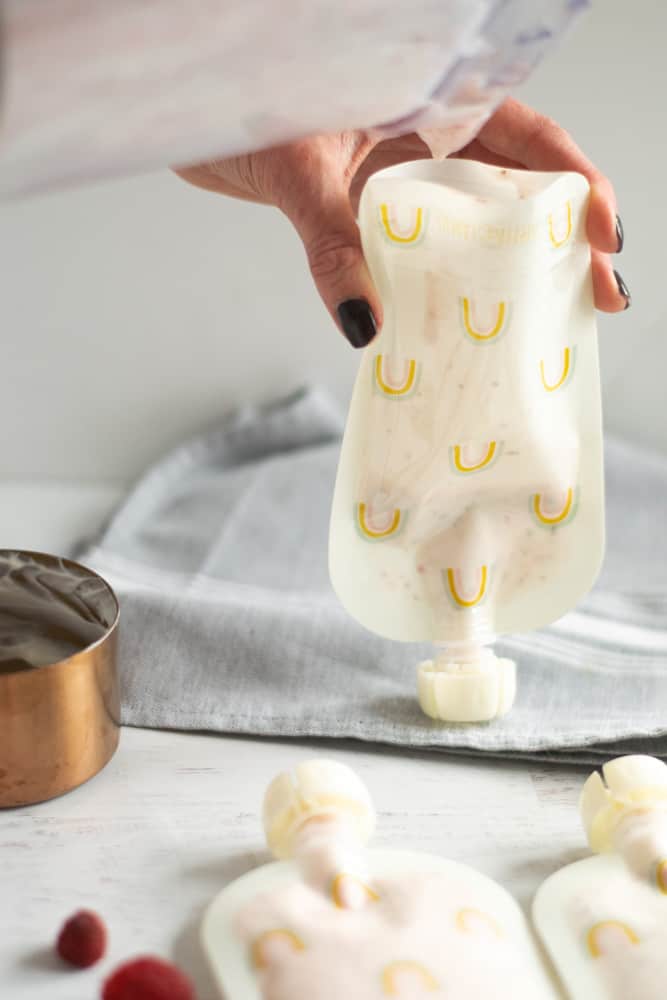
As babies get a bit older, you can get more creative and use it in recipes or mix in ingredients to enhance the flavor and texture.
Approaching the one-year mark, your infant is likely turning into a toddler—or is very close. At this point, they are usually down to one to two naps, and you have a little more of a predictable schedule.
That makes it a bit easier to plan meals. I’ve shared our 1 year old eating schedule, in which it’s easy to offer yogurt as a morning snack with a muffin, for example.
Another difference when serving yogurt to a 1 year old and up is that you can add more ingredients, since they are more proficient eaters by this time and they’ve probably tried multiple things.
Yogurt Recipes for Babies
If baby refuses to eat yogurt off of a baby spoon or you feel it’s too messy, there are plenty of greek yogurt recipes for babies you can try!
Yogurt is incredibly versatile and can be used in many recipes to enhance nutritional value. It is a common substitute for ingredients like sour cream, heavy whipping cream, or mayo—used interchangeably in a 1:1 ratio.
- Greek yogurt banana bread – Omit the chocolate chips and this recipe has no added sugars!
- Avocado chia pudding
- Taco tortellini
- Strawberry kiwi greek yogurt popsicles
- Carrot banana smoothie
- Spinach Egg Feta Muffins
- Add yogurt to strawberry chia jam to increase healthy fats and fiber. You can also use sliced bananas, berries, unsweetened applesauce, or diced mangos to add flavor and nutrition.
- Honey yogurt dip, but wait until the baby is older than one year old since this recipe uses honey.
- Kiwi mango smoothie

Another option for add-in’s to yogurt are more healthy fats, like peanut butter or another nut butter. It’s important to introduce peanuts early on to prevent allergies.
Combining peanut butter with yogurt is a great place to start. And like I mentioned earlier, adding fruit or smoothie melts is great.
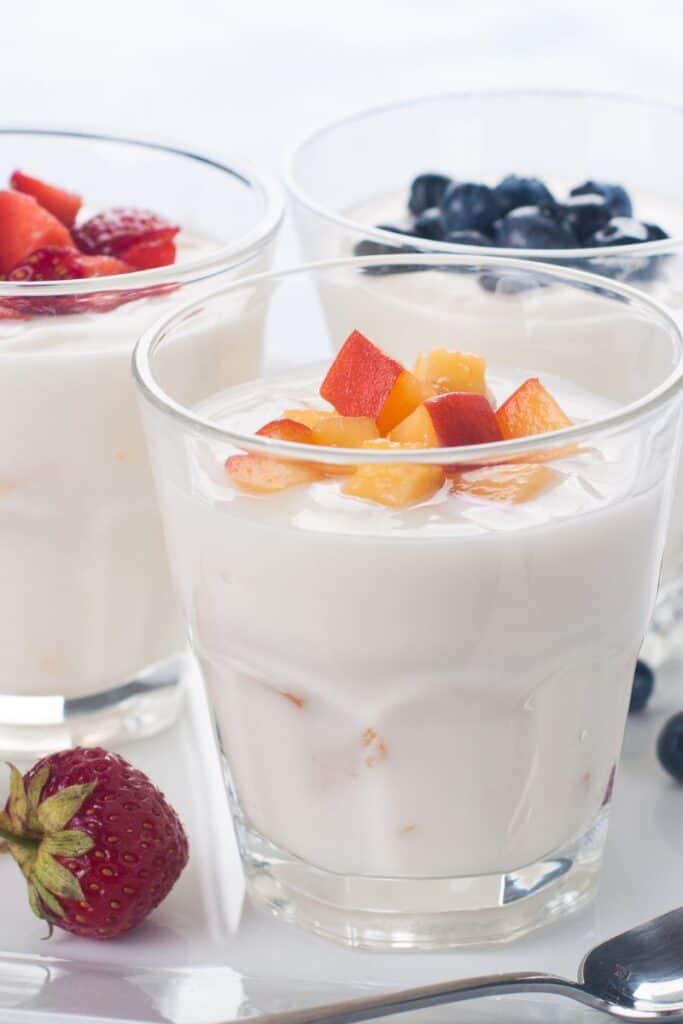
Have a recipe that calls for buttermilk, but you don’t have any? For every cup of buttermilk, you can substitute 2/3 cup plain yogurt and 1/4 cup milk.
Want to use less butter? Use 1/4 cup Greek yogurt and 1/2 cup butter to equal 1 cup butter.
What Kind of Yogurt Is Best for Babies?
When deciphering which kind of yogurt is best for babies in the yogurt aisle, there are things you’ll want to look for and things you’ll want to avoid.
Nutrients to Look For
- High in fat – As mentioned earlier, the best yogurt for babies is plain, whole milk yogurt. Whole milk is high in fat. Skip the fat-free yogurts for babies.
- Live active cutures – These live and active cultures (the more, the better) are what offer the digestive tract and immunity benefits for babies, as well as a myriad of other health benefits. The human microbiome (our live microbe “party”) is warranting so much research now because it’s so unique!
- Plain flavor – Babies under age 1 (and even until age 2) have no nutritional need for added sugars and flavorings. Therefore, stick with a plain, full fat version for baby.
- Greek yogurt If you prefer, you can try plain, whole milk Greek yogurt. Greek yogurt is thicker than regular yogurt and may be easier for your baby to grasp or swallow. Greek yogurt is also higher in protein.
- Plant-based yogurts – If baby is lactose intolerant or is allergic to dairy products, you can find plain, plant-based yogurts or yogurt alternatives, like those made with coconut milk or cashews. There are some plant-based yogurts that have no added sugars and have probiotics added in, such as:
Good to Know
Alot of the yogurt marketed to babies (like Gerber yogurt pouches or Happy baby yogi bites), surprisingly have sugars added to them, when there is no need for this!
Nutrients to Avoid
- Added sugars– Some yogurt brands have quite a bit of added sugar in them, which is something you’ll want to avoid when feeding yogurt to your baby. Make sure to look at the nutrition label to avoid any ingredients like corn syrup, honey, maple syrup, coconut sugar, agave, or anything ending in “-ose.”
- Long ingredient lists– There is no need to buy yogurts with long ingredient lists, beyond the basics of what should be in it. Extra fillers, preservatives or colorings are things to avoid.
- Artificial sweeteners – Another thing that manufacturers do to increase sweetness but still market their product as “zero sugar” is to use artificial sweeteners. This is not something I would recommend introducing to baby. Look for terms like stevia, splenda, truvia, aspartame, sucralose, saccharin and Acesulfame K, among others.
FAQ and Key Takeaways
The best yogurt for baby is plain, unsweetened full-fat yogurt. You can get regular or Greek. Greek yogurt is thicker and may be easier for your baby to spoon. The World Health Organization recommends no added sugars before two years of age.
Babies can have plant-based yogurts, such as those made with coconut or cashew. Moniter baby initially to ensure there are no reactions. You still want to choose a yogurt with no added sugars.
There are several reasons to introduce yogurt, including its immune-boosting probiotic content. Yogurt also has fat, protein, and calcium—all important for your baby’s growth and development. If your baby doesn’t like yogurt, try adding in flavor boosters. You can serve plain or enhance the flavor by adding fruit, peanut butter or nut butter, chia jam, or spices like cinnamon. You can also use yogurt in recipes, such as baked goods, dips, sauces and snacks.
References:
- Shoda T, Futamura M, Yang L, Narita M, Saito H, Ohya Y. Yogurt consumption in infancy is inversely associated with atopic dermatitis and food sensitization at 5 years of age: A hospital-based birth cohort study. J Dermatol Sci. 2017;86(2):90-96. doi:10.1016/j.jdermsci.2017.01.006
- Ashraf R, Shah NP. Immune system stimulation by probiotic microorganisms. Crit Rev Food Sci Nutr. 2014;54(7):938-956. doi:10.1080/10408398.2011.619671
- Nakamura M, Hamazaki K, Matsumura K, et al. Infant dietary intake of yogurt and cheese and gastroenteritis at 1 year of age: The Japan Environment and Children’s Study. PLoS One. 2019;14(10):e0223495. Published 2019 Oct 7. doi:10.1371/journal.pone.0223495
- Fernandez MA, Marette A. Potential Health Benefits of Combining Yogurt and Fruits Based on Their Probiotic and Prebiotic Properties. Adv Nutr. 2017;8(1):155S-164S. Published 2017 Jan 17. doi:10.3945/an.115.011114
- Huang M, Yang F, Wu Y, et al. Identification of peptides sequence and conformation contributed to potential allergenicity of main allergens in yogurts. Front Nutr. 2023;9:1038466. Published 2023 Jan 5. doi:10.3389/fnut.2022.1038466
Support Bucket List Tummy
Like This Content?
Support Bucket List Tummy